
3D Model Licence: Can You Sell the Print?
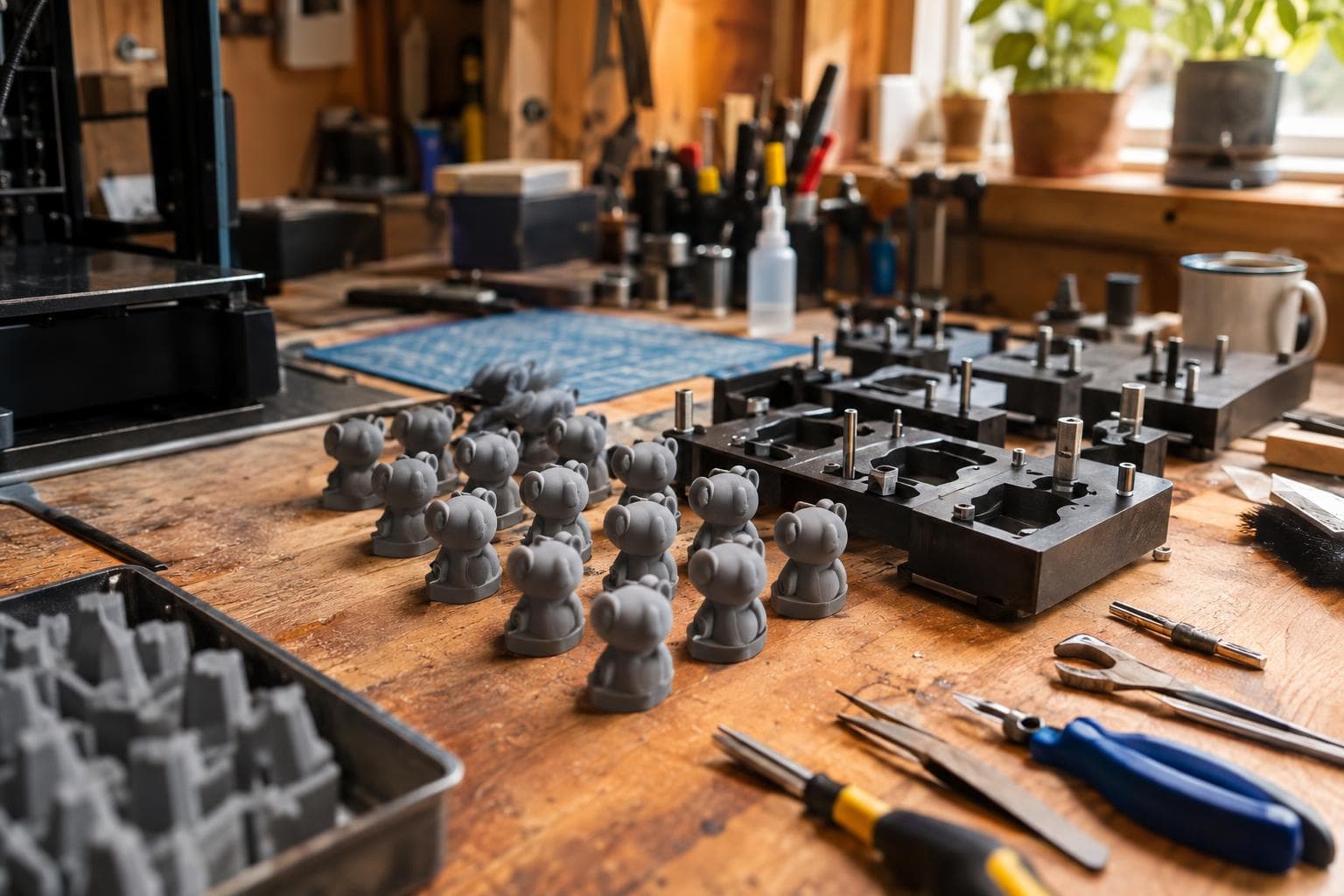
A downloaded model can be free to access and still be forbidden for sale. The short answer is to find the actual licence, identify whether physical commercial use is allowed, and record that evidence before starting the print.
A licence controls permission, not effort. Hours spent repairing mesh errors, changing supports, sanding layers, or packaging the finished part do not turn a non-commercial model into a commercial-use model.
Mistake 1: Treating a free download as free for business
"Free" describes the price of the download, not the rights granted with it. A creator may allow anyone to download a file while reserving the right to approve commercial use separately.
A non-commercial licence prohibits selling prints of that model regardless of how much work the printing took. That includes a raw print, a modified print, a painted version, and a print assembled into a larger item if the model remains part of what is being sold.
The check: find the licence name on the model page and open the licence text if the page links to it. Look specifically for terms such as commercial use, sell, physical copies, or non-commercial. Do not treat a download button, a free price, or a marketplace badge as permission.
If the page says personal use only, private use, no commercial use, or an equivalent phrase, stop. You need written permission from the rights holder before committing material or machine time.
Mistake 2: Checking the platform instead of the file
A platform's general terms do not necessarily grant rights to each model. Uploaders select licences, add custom restrictions, or provide no usable licence at all. A model may also move between platforms while the creator's original conditions remain attached to the file.
The same problem appears with model packs, remixes, and files copied into a new repository. The person hosting the file may not own the rights or may have omitted the original attribution and licence notice.
The check: save the model page, creator name, licence label, licence URL if one exists, download date, and file version in the project folder. Keep a screenshot or exported copy of the licence information. If the page has no clear licence, treat the model as all rights reserved. Permission is not implied by silence.
This record matters when a file is updated after the print is finished. It also prevents a production folder from quietly mixing an approved model with a later download carrying different terms.
Mistakes 3 and 4: Attribution and Creative Commons licence details
Mistake 3: Assuming attribution means commercial permission
Attribution and commercial permission are separate conditions. A licence can require credit while allowing sales, or require credit while prohibiting commercial use.
Creative Commons BY is the common example of a licence that generally allows commercial use, including selling physical prints, provided the required credit is supplied. The credit may need the creator's name, the model title, the licence name, a link to the licence, and an indication of changes. The exact notice depends on the licence and the creator's instructions.
Attribution requirements apply to derivatives as well as to the original file. If you scale the model, repair a mesh, combine it with another file, or alter its geometry, the resulting derivative still needs the required attribution. A modified filename does not erase that duty.
The check: write the attribution before production begins, not after the sale. Decide where it will appear: product listing, printed insert, packaging, project documentation, or another location that satisfies the licence. Record every modification that the licence asks you to identify.
Do not claim that you designed the whole object if the geometry came from someone else. A new support layout or a colour change does not normally make the underlying model yours.
Mistake 4: Reading only the first two letters of a Creative Commons licence
The suffixes carry the commercial and modification rules. This is the licence check we use before treating a creative commons print as suitable for sale:
| Licence signal | Selling an unmodified physical print | Derivative or modified model | Main failure mode |
|---|---|---|---|
| CC BY | Generally allowed, with attribution | Generally allowed, with attribution and change notice | Missing or incomplete credit |
| CC BY-SA | Generally allowed, with attribution | Sharing the derivative normally requires the same licence terms | Publishing a remix under closed terms |
| CC BY-NC | Not allowed under the licence | Commercial sale remains prohibited | Calling labour or modification a loophole |
| CC BY-ND | Commercial use may be allowed for an unchanged work | Sharing adaptations is restricted; interpretation of a physical object can require care | Modifying the model and assuming the sale is covered |
| CC0 or public-domain dedication | Generally allowed without licence attribution | Generally allowed under the dedication | Overlooking trademark, privacy, or patent rights |
| No clear licence or all rights reserved | No permission to assume | No permission to assume | Printing first and asking later |
CC BY-SA does not mean the physical object must automatically be given away. It mainly affects adaptations and the terms under which those adaptations are shared. The exact boundary between a digital adaptation and a physical product can depend on the work and local law, so a commercial remix that matters to the business deserves written permission or legal advice.
CC BY-ND deserves the same caution. An unchanged print may fall within the permitted commercial use, but changing the model can create an adaptation that cannot be shared under the licence. If the model needs repair, resizing that changes proportions, or a functional redesign, ask the rights holder before selling it rather than relying on a favourable interpretation.
Mistakes 5 and 6: Derivatives and rights beyond copyright
Mistake 5: Believing a derivative gets a clean licence
A remix is not automatically unlicensed just because the new file has a different name. It may contain geometry from the original model, a sculpt from another creator, or a texture and logo with separate rights.
This is where licence stacking causes trouble. One source may allow commercial use, while another source inside the same project may be non-commercial. A share-alike condition may also conflict with a plan to distribute the combined file under closed terms.
The check: build a rights list for every imported component:
- original model and creator
- remixed or repaired model and its source
- textures, logos, fonts, and decorative files
- licence for each component
- whether the finished sale includes the component or only uses it as a tool
- attribution text and any share-alike requirement
For a printed object, distinguish between selling the physical result and distributing the digital derivative. Permission to sell one does not automatically grant permission to sell, upload, or send the other. If customers receive the STL, STEP, 3MF, or another editable file, that is a separate distribution question.
The cheap way to reduce this risk is also the sensible way: choose a model with a clear commercial-use licence and no embedded third-party parts. Do not buy a rights-management service or build a complicated tracking system for a one-off print when a saved licence record and a clean source file solve the problem.
Mistake 6: Forgetting rights outside copyright
A model licence may cover the file while leaving other rights untouched. A branded character, company logo, product shape, or ornamental design can raise trademark, publicity, design-right, or patent questions even if the file carries a permissive copyright licence.
The licence also does not guarantee that the object is safe, functional, or suitable for a particular use. A creator can grant permission to copy a file without accepting responsibility for a load-bearing bracket, a child-accessible part, a food-contact item, or an electrical enclosure.
The check: describe the intended sale in one sentence before printing. If that sentence includes a brand, a recognizable character, a safety-critical function, or a claim that the part replaces a regulated product, perform a separate rights and safety review. A commercial-use model is permission to use the model under its licence, not a clearance certificate for every way the result might be marketed.
Production gate and frequently asked questions
A five-minute licence gate before production
Use this order before committing filament, resin, powder, wood, or machine time:
- Identify the creator and the exact file version.
- Record the licence in plain language: commercial sale allowed, attribution required, modifications allowed, and file redistribution allowed or not.
- List every imported model or asset in the derivative.
- Draft the attribution and identify where it will be shown.
- Separate physical-sale permission from permission to distribute the source file.
- Stop for written permission if any condition is missing, contradictory, or unclear.
If the licence cannot answer the sale question, the answer is not yes. Pick a different model or contact the rights holder. That decision is cheaper than producing a batch that cannot legally be listed or sold.
Frequently asked questions
Can I sell a print from a free STL file?
Only if the licence allows commercial use or the rights holder gives written permission. A free STL with a non-commercial licence cannot be sold, regardless of the time spent printing, repairing, finishing, or packaging it.
Do I need attribution for a modified 3D model?
If the licence requires attribution, yes. Attribution requirements apply to derivatives as well as to the original file. Include the creator, source model, licence, and modification notice required by that licence.
Can I sell a physical print but keep the modified STL private?
Sometimes, but the answer depends on the licence. A licence may allow commercial physical copies while restricting adaptations or digital redistribution. Check the commercial-use, derivative, and share-alike terms separately, and get permission if the wording does not clearly cover your plan.
The Boss Factory builds made-to-order 3D printing, design, and custom electronics work; request a quote.
Have a project in mind?
Tell us what you want built — we reply within 24–48 hours.