
5 Practical Uses for Custom 3D Printing Beyond Toys and Figurines
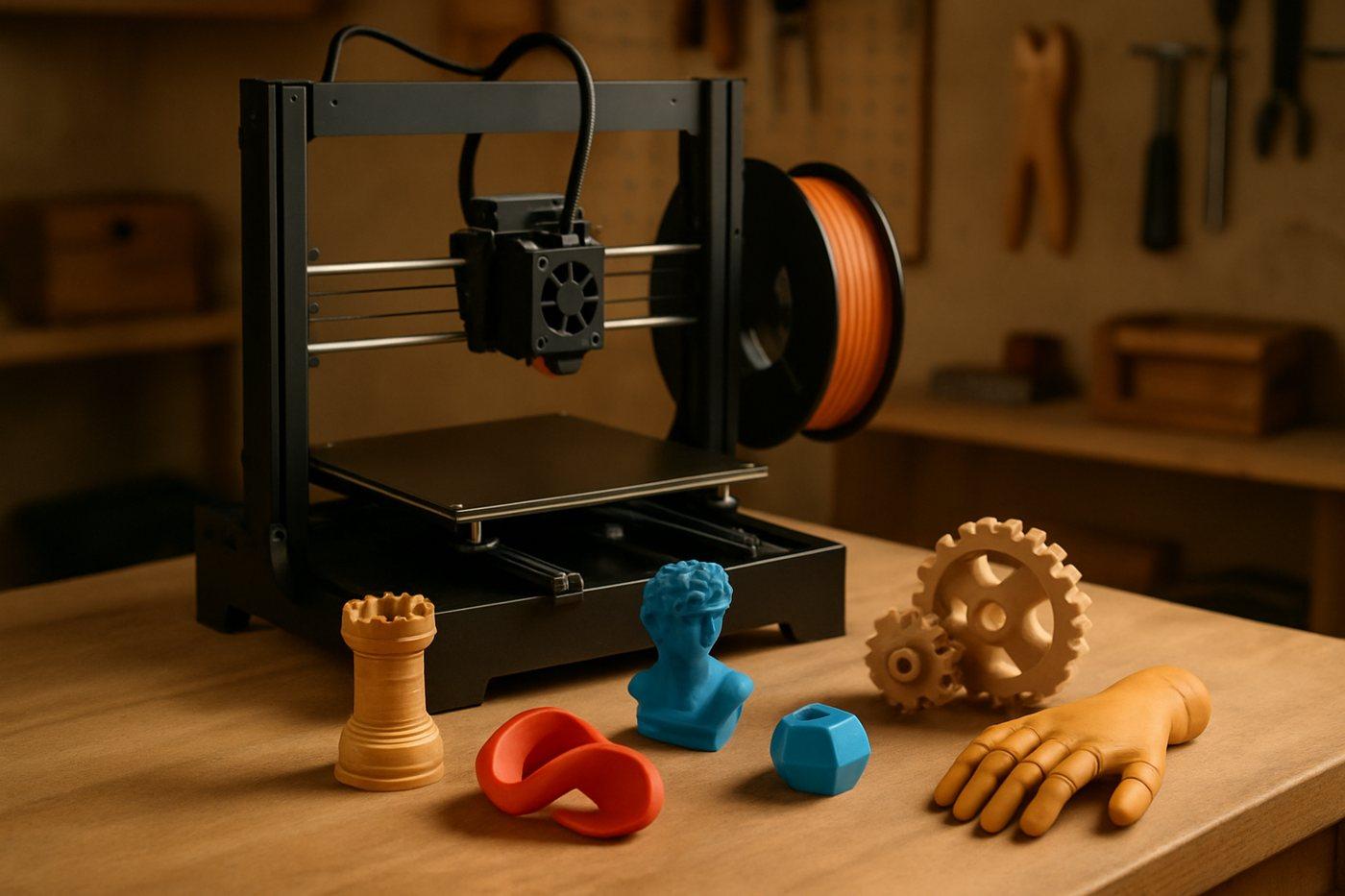
When people think "3D printing," they usually picture a small plastic toy or a desk trinket. Fair enough — we print those too. But most of our 3D print work for local homes and small businesses in Greater Moncton solves a real, specific problem. Here are five of the most common ones.
1. Replacement parts for things you can't buy anymore
A broken knob on a 10-year-old appliance, a cracked bracket inside a cabinet, a snapped clip on a car interior panel — if the manufacturer doesn't sell the part anymore (or wants an absurd price for it), we can usually model a replacement from measurements or the broken original and print it in a durable filament. It's often faster and cheaper than sourcing a discontinued part.
2. Custom brackets, mounts, and organizers
Wall-mounted brackets sized to your exact device, drawer organizers cut to your exact drawer, cable/routing clips for a specific setup — these are all things off-the-shelf products almost never fit perfectly. A custom-printed bracket designed around your actual measurements usually looks and works better than a generic one from a big-box store.
3. Prototypes before you commit to a bigger build
If you're planning a woodworking or CNC project with a part that needs to fit precisely — a hinge mechanism, a jig, a mounting plate — we'll often print a quick prototype first. It lets you hold the actual shape in your hand, test the fit, and catch design issues before we cut expensive material.
4. Small-batch production for local businesses
Several shops around Moncton and Dieppe use us for small production runs of functional parts — display stands, point-of-sale components, branded merchandise, packaging inserts. 3D printing makes sense for these when the quantity is too small to justify an injection-mold tool but too custom for a stock product.
5. Combined builds with electronics or woodworking
Some of our favorite projects pair 3D-printed enclosures with custom electronics — a printed case for a sensor build, a housing for an LED display, a control panel shell that gets CNC-cut openings and a printed internal mount. Printing is often the fastest way to get a precise enclosure shape that wood or metal fabrication would take much longer to achieve.
What material should it be printed in?
Most functional parts (brackets, replacement parts, enclosures) get printed in PETG or a similar durable filament for strength and some heat resistance. Purely decorative pieces can use standard PLA. If a part needs to handle real outdoor exposure or mechanical stress, tell us — we'll recommend the right material and wall thickness for the job.
Got something broken, or an idea for a custom part? Request a quote — send us a photo or rough dimensions and we'll tell you if 3D printing is the right fit.
Have a project in mind?
Tell us what you want built — we reply within 24–48 hours.