
- co2 laser
- chiller temperature
- laser maintenance
- laser overheating
- summer shop
Chiller Temperature: A Hot-Shop Maintenance Routine
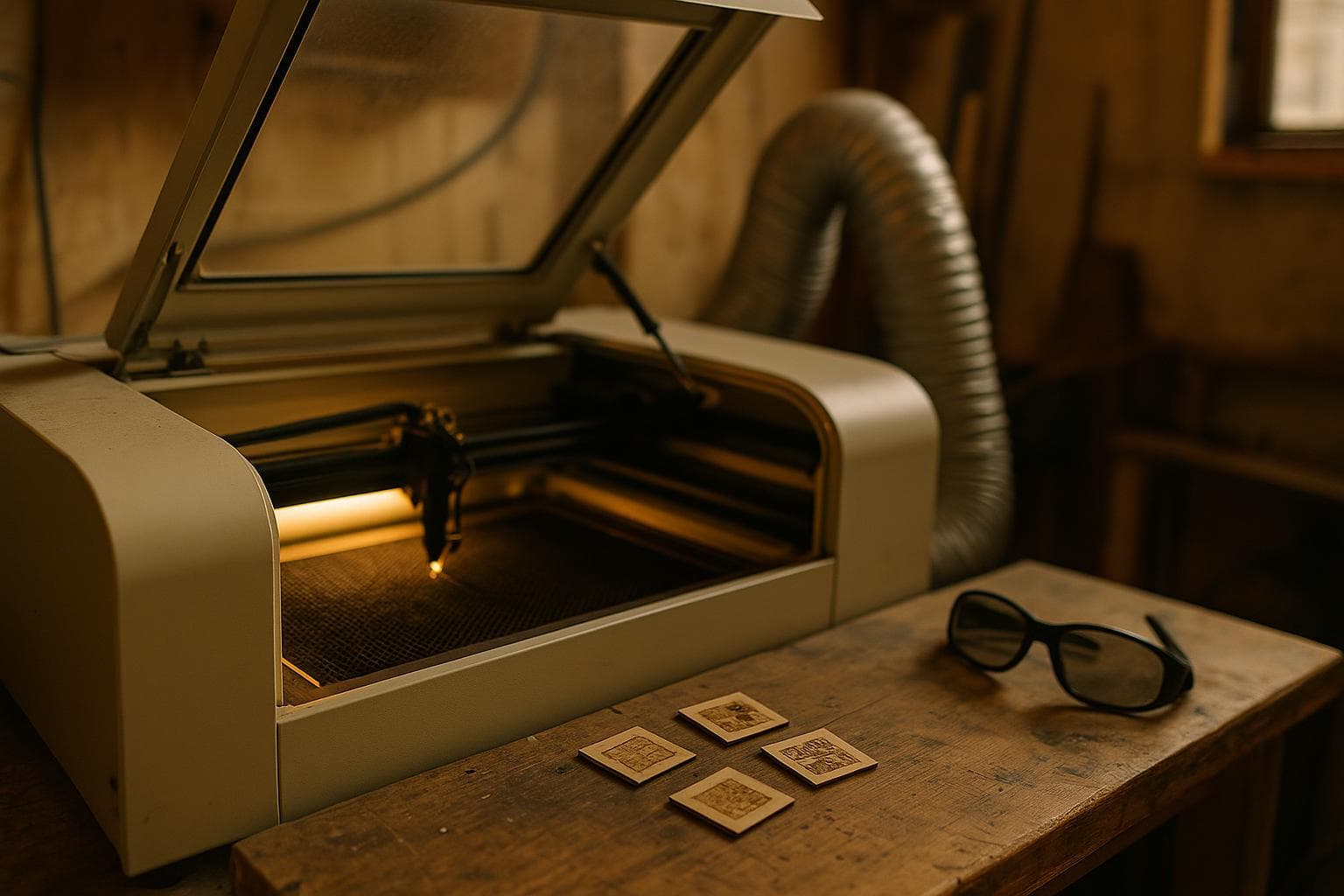
A CO2 laser that cuts cleanly in spring can lose its edge in a closed shop during summer, even with the same speed and power settings. The short answer is to manage chiller temperature under load, not to chase the lowest number on the display.
Why coolant temperature changes laser output
CO2 tube output falls as coolant temperature rises. The result may appear first as incomplete cuts, a wider range of settings that seem usable, or more passes required for material that previously cut in one. The tube is not necessarily failing at that point, but warm coolant reduces the operating margin and continued heat can shorten tube life.
Check the coolant temperature while the tube is firing, since an idle reading can look normal while the water warms during a long job.
Use the tube and chiller manufacturer's specified coolant range as the controlling value. There is no universal target that suits every glass tube, chiller, room, and coolant circuit. Record the temperature at idle and after a representative cutting cycle. The difference between those readings tells you more than a quick glance before the job.
A chiller can only reject heat into air that is cooler than its target. If the room is close to the setpoint, the condenser has little temperature difference to work with. If the room is hotter than the target, the chiller cannot remove heat at the required rate, regardless of how low the setpoint is.
The chiller routine by interval
Before the first job each day
- Read the coolant temperature before firing the tube, then check it again after the first sustained cut.
- Confirm that the flow alarm is clear and that the pump sounds normal.
- Look for a new bubble stream, damp fitting, low reservoir level, or a kinked hose.
- Check that the chiller's intake and exhaust are not blocked by material, dust, or a wall placed too close to the unit.
- Note the room temperature if the machine is in a closed space. A hot room is a cooling-system problem, not a software setting.
During every long cutting session
Watch the temperature trend rather than waiting for an alarm. If it rises steadily through the manufacturer's normal range, pause and find the cause. Reduce the heat entering the room, improve clearance around the condenser, or divide the job into sensible work periods. Do not compensate immediately by increasing laser power or slowing the cut without understanding the temperature change.
Weekly
With power removed as required by the machine manual, clean dust from the chiller's air filter and condenser area. Use the cleaning method specified for that chiller. Inspect the hoses for rubbing, whitening, soft spots, and tight bends. Check fittings for dried residue or fresh moisture, and inspect the coolant for cloudiness, growth, or suspended debris.
Monthly
Test the flow and temperature alarms according to the chiller manual rather than bypassing them for convenience. Compare the displayed temperature with a suitable reference thermometer if the reading has become suspicious, but do not adjust calibration unless the manufacturer provides a procedure for that model.
Record room temperature, idle coolant temperature, loaded coolant temperature, and the job duration.
At the start of the hot season
Check the coolant replacement interval for both the chiller and the tube manufacturer. Coolant requirements are not universal: some systems specify distilled water, some permit an approved additive, and some use a different fluid. Follow the stated fluid and conductivity requirements rather than assuming that distilled, deionized, tap, or antifreeze-based water is automatically correct.
Clean the full accessible airflow path, verify hose routing, and make sure hot exhaust air is not being recirculated into the chiller intake. If the room cannot stay cooler than the target, change the room ventilation or operating schedule instead of forcing a lower setpoint.
What the readings usually mean
| Coolant condition | CO2 tube behavior | Chiller behavior | Main failure mode prevented |
|---|---|---|---|
| Stable within the specified range during a loaded job | Output remains repeatable within the machine's normal variation | Heat removal keeps up with tube load | Unnecessary power changes and false alignment diagnoses |
| Temperature rises during a long cut | Output falls as coolant warms; cutting margin gets smaller | Compressor and fan work harder, then may alarm | Tube stress and incomplete cuts |
| Room air is close to the target | Output may start normally but temperature drifts upward | Condenser has too little temperature difference to reject heat well | Hot-room thermal runaway |
| Setpoint is below the room's practical conditions | Temperature may never reach the setting | Unit runs continuously or cycles abnormally | Condensation, wasted energy, and misleading settings |
| Flow is restricted or coolant is contaminated | Tube cooling becomes uneven or inadequate | Alarm, bubbles, noise, or unstable temperature may appear | Local hot spots, pump damage, and premature tube failure |
The table is a troubleshooting map, not a substitute for the limits in the manuals. A stable display does not prove that coolant is moving correctly, and a flow alarm does not identify whether the cause is a pump, hose, sensor, filter, or fluid problem.
Forum maintenance advice worth rejecting
The cheap way is good enough here: a clean condenser, clear airflow, the specified coolant, and a temperature log solve more hot-weather problems than an upgraded controller or oversized pump. Do not buy a more expensive chiller until the room temperature, airflow, and loaded coolant reading show that the existing unit is undersized.
Several common habits create new problems:
- Adding ice bottles: This changes temperature abruptly, introduces handling and contamination risks, and does not fix poor heat rejection. Use it only if the machine manufacturer explicitly permits that method.
- Setting the coldest possible target: Lower is not automatically safer. A target below the room's capability cannot be maintained, and a cold surface in humid air can reach its dew point and collect condensation.
- Adding antifreeze by default: It can change heat capacity, viscosity, conductivity, and material compatibility. Use it only when the equipment documentation specifies the fluid and concentration.
- Replacing water on a forum schedule: Coolant replacement depends on the fluid, loop, contamination, and manufacturer instructions. Inspect and measure where the documentation calls for it instead of copying a calendar from another machine.
- Assuming more flow always means more cooling: The tube and pump have an intended flow range. Excess flow can create restrictions or stress without solving a condenser that is dumping heat into air that is too warm.
If coolant is in range but cuts remain weak, check focus, lens and mirror condition, alignment, material thickness, air assist, and power calibration in that order appropriate to the machine. Temperature is a strong suspect when performance degrades as the session continues or when the room warms, not a blanket explanation for every weak cut.
Frequently asked questions
What chiller temperature should a CO2 laser use?
Use the range specified for the particular tube, chiller, and machine. Measure both idle and loaded temperature, then keep the loaded value inside that range with room for normal fluctuation. Do not copy a target from a different tube or chiller model.
Can a chiller cool below room temperature?
Only when its refrigeration system can reject heat into air cooler than its target. In a hot closed shop, the practical limit rises with the room temperature. Improve condenser airflow or room ventilation before lowering the setpoint.
Why does my laser cut worse after running for a while?
Rising coolant temperature is one likely cause because CO2 tube output falls as coolant temperature rises. Confirm it by logging the coolant temperature during the job, then check flow, condenser cleanliness, room temperature, focus, alignment, optics, and air assist before changing power settings.
We build made-to-order laser cutting and engraving work through The Boss Factory.
Related services
All services →
Have a project in mind?
Tell us what you want built — we reply within 24–48 hours.